
Apollo 11 & 12 UAP: What the 2026 Declassified Files Actually Reveal
The May 2026 PURSUE release dropped more than 150 files onto war.gov/UFO. Most headlines chased the recent military videos and FBI orb reports. Yet buried in the NASA tranche sits something quieter and, in some ways, more compelling: the technical crew debriefings from the Apollo lunar missions.
These are not grainy cockpit videos or second-hand whistleblower claims. They are the direct words of the men who walked on the Moon, recorded within days of their return in 1969 and 1972. For more than five decades those pages stayed out of public view. Now they sit in the open, part of the largest single dump of UAP-related government records in American history.
At Insider Release we read the files. We cross-checked the dates, the mission timelines, and the surrounding intelligence context. What follows is not speculation about little green men. It is a close reading of what the astronauts reported, why those reports were treated the way they were, and what the 2026 disclosure actually adds to the long-running conversation about unidentified phenomena in space.
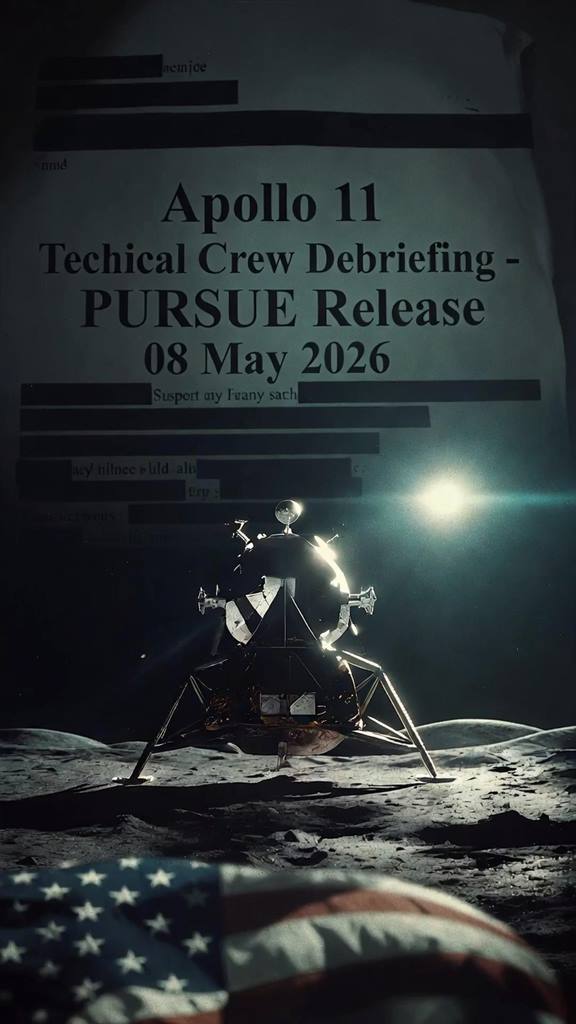
The Apollo 11 Technical Crew Debriefing – Primary Source Material
The most detailed document in the release is the July 1969 technical debrief of the Apollo 11 crew. It runs dozens of pages and covers everything from lunar module performance to personal observations. Three passages stand out.
First, Neil Armstrong and Buzz Aldrin described an object they observed while outbound to the Moon. Aldrin noted it appeared to be pacing the spacecraft at a distance before eventually moving away. The report does not label it hostile or artificial; it simply records that the crew could not immediately identify it against the star field.
Second, Aldrin reported intermittent flashes of light inside the cabin during the coast phase. He described them as brief, bright, and occurring at irregular intervals. Mission control initially attributed similar phenomena on later flights to cosmic rays or spacecraft outgassing, yet the timing and character in Aldrin’s account left the crew uncertain.
Third, on the return leg Aldrin logged a bright light source that the crew tentatively ascribed to a possible laser. The language is careful: “tentatively assumed.” No trajectory data, no radar confirmation, and no follow-up investigation appears in the released pages. The entry simply exists as part of the official record.
These are not dramatic close encounters. They are the observations of highly trained observers operating in an environment where every anomaly is logged because lives depend on it. The 2026 release does not prove the objects were extraterrestrial. It does prove that the United States government possessed these specific reports and chose, until recently, to keep them out of the public domain.
Apollo 12 – Flashes That “Sailed Off in Space”
Apollo 12’s command module pilot Alan Bean filed a shorter but equally intriguing note. During the mission he recorded multiple instances of bright flashes that appeared to move away from the spacecraft at speed. Bean’s phrasing in the declassified transcript is memorable: the lights were “sailing off in space.”
Again, the language is observational rather than interpretive. Bean did not claim to have seen a craft. He recorded visual phenomena that did not match known satellite passes, meteor activity, or internal reflections. The report was filed, filed away, and largely forgotten until the PURSUE portal made it searchable.
What makes these Apollo 12 entries useful is their consistency with patterns seen in later military UAP reports. Fast-moving lights that change direction or disappear without obvious explanation appear repeatedly in the 2026 tranche. The difference is that Apollo observations came from men whose professional credibility is difficult to dismiss.
Apollo 17 – Imagery and the “Very Bright Particles”
The release also includes selected imagery and crew notes from Apollo 17. One frame shows what the caption describes as archival imagery from the lunar surface with “unidentified phenomena” noted in the margin. Another transcript records the crew reporting “very bright” particles of light during the mission.
These visual elements matter because they move the discussion beyond pure anecdote. Photographs and film from the Apollo era have been studied for decades by independent researchers. The 2026 files add official provenance: these images were logged, reviewed internally, and eventually cleared for public release under the PURSUE framework.
How the Apollo Cases Fit the Broader 2026 Disclosure
The PURSUE release is deliberately mixed. It contains 1940s “flying disc” intelligence summaries, FBI field reports from 2023, and the Apollo material side by side. That juxtaposition is intentional. It signals that UAP reporting spans the entire history of American space and aviation programs.
The Apollo files are older than most entries in the tranche, yet they carry unique weight. They come from a period when the United States was at the absolute peak of its technical ambition and when any unexplained observation near a national-security asset would have triggered immediate classified scrutiny. The fact that these particular pages survived the declassification review suggests the government no longer sees strategic harm in their release.
At the same time, the files remain incomplete. Redactions persist. Context around follow-up investigations is thin. The cynical reading is that the administration gains political credit for transparency while releasing material that is intriguing but not explosive. The more charitable reading is that this is the first tranche of many, and future drops may contain the radar tracks, telemetry, or after-action reports that would make these visual accounts more conclusive.
Alternative Explanations and the Limits of the Data
Any serious analysis must consider mundane causes. Apollo spacecraft vented gases, shed ice particles, and operated in an environment rich with cosmic radiation and micrometeoroids. Reflections off the lunar module or command module windows could produce bright moving lights. The “laser” Aldrin mentioned could have been a misidentified star or distant spacecraft.
Yet the crew were not novices. They had trained for years to distinguish between known phenomena and anomalies. Their reports were made in real time to mission control and later expanded in formal debriefs. The language they used – careful, provisional, free of drama – is exactly what one would expect from professionals who understood the stakes of misidentification.
The 2026 files do not resolve the ambiguity. They simply place the ambiguity on the public record. That alone shifts the conversation. For decades the default assumption was that any Apollo-era UAP story was either misremembered or exaggerated. The declassified transcripts show the stories originated in official channels and were treated seriously at the time.
INSIGHTS
The primary source for the Apollo 11 material is the NASA technical crew debriefing file released under PURSUE on 8 May 2026 and hosted at war.gov/UFO. Specific passages appear under the reference NASA-UAP-D4-Apollo-11-Technical-Crew-Debriefing-1969. The Apollo 12 and Apollo 17 entries sit in adjacent NASA and Department of War folders within the same release.
Supporting context comes from the All-domain Anomaly Resolution Office (AARO) Information Paper on declassification processes published in 2025, which outlines how historical UAP records are reviewed and released. The National Archives and Records Administration maintains Record Group 615 for Unidentified Anomalous Phenomena, established under the 2024 NDAA; several Apollo-era documents now feed into that collection.
These sources matter because they are not tertiary summaries or media retellings. They are the original government records. Researchers can download the PDFs directly from the PURSUE portal, compare timestamps against known mission timelines, and judge the language for themselves. That accessibility is new. Until May 2026, the same material required FOIA requests that were routinely delayed or heavily redacted.
FAQs
Did Buzz Aldrin see an alien spacecraft during Apollo 11? No. The declassified transcript records Aldrin observing an unidentified object outbound, intermittent cabin flashes, and a bright light on return that the crew tentatively linked to a possible laser. The language is observational and leaves the nature of the phenomena open.
Are there actual photographs of the Apollo UAP in the 2026 release? The release includes selected Apollo 17 imagery with marginal notes on “unidentified phenomena.” No high-resolution close-up photographs of structured craft appear in the initial tranche. The value lies more in the crew transcripts than in dramatic visuals.
Why were these Apollo reports kept classified for so long? The files do not contain an explicit explanation. Standard practice at the time treated any observation near national technical assets as sensitive. The 2026 PURSUE directive changed the default from classification to release unless specific harm could be demonstrated.
Could the flashes simply have been ice particles or window reflections? That remains a plausible explanation for some of the visual phenomena. The transcripts themselves do not rule it out. What the documents do show is that the crew considered and rejected the most obvious mundane causes before logging the entries.
Will future PURSUE releases include more Apollo or Skylab material? The Department of War has stated that additional tranches will appear every few weeks as review continues. Historical NASA and military records from the 1960s and 1970s are explicitly part of the ongoing effort.
How do these cases compare to modern military UAP reports? The Apollo observations share characteristics with later reports: fast-moving lights, objects that do not match known traffic, and trained observers who could not immediately identify the source. The main difference is the extreme environment and the absence of radar or FLIR data that accompanies contemporary military encounters.
What does this mean for future Artemis missions? Nothing definitive. The files simply demonstrate that even during the most carefully planned human spaceflight program, unexplained visual phenomena occurred. Future crews will operate with far better instrumentation; whether that resolves or deepens the mystery remains to be seen.
Takeaways
The 2026 PURSUE release does not deliver smoking-gun proof of extraterrestrial visitation. It does something more useful: it removes the excuse that serious people never reported serious anomalies during the Apollo era. The transcripts exist. They are now public. They deserve the same careful scrutiny applied to any other declassified intelligence file.
At Insider Release we treat these documents the way they were written – with precision, without hype, and with full awareness that ambiguity is the most honest answer available. The Apollo astronauts encountered the unknown. So have countless pilots and radar operators since. The difference in 2026 is that the government has finally stopped pretending the file cabinets were empty.
Call to Action
Read the actual transcripts yourself at war.gov/UFO. Compare them with the AARO historical reviews. Then tell us in the comments what stands out to you. For more on the May 2026 tranche, see our breakdown of the Los Alamos nuclear-site reports and the practical guide to searching the full PURSUE archive. New files are expected soon; we will be here when they drop.
Disclaimer: This article was created with the partial or full assistance of artificial intelligence. The text and all accompanying images were generated or significantly supported by AI tools.
Insider Release
Declassified. Analyzed. Explained.
You may also like
DOE OICI UAP FOIA: What Energy Intelligence Releases (and Withholds)
CIA Stargate Documents Explained: What’s in the CREST Remote-Viewing Files (and How to Read Them)
Why Is AARO Buying Private Pre-1990 UAP Archives?
What Does Grusch’s UAP NDA Waiver Actually Allow?
NARA UAP Records Collection: What’s in RG 615