
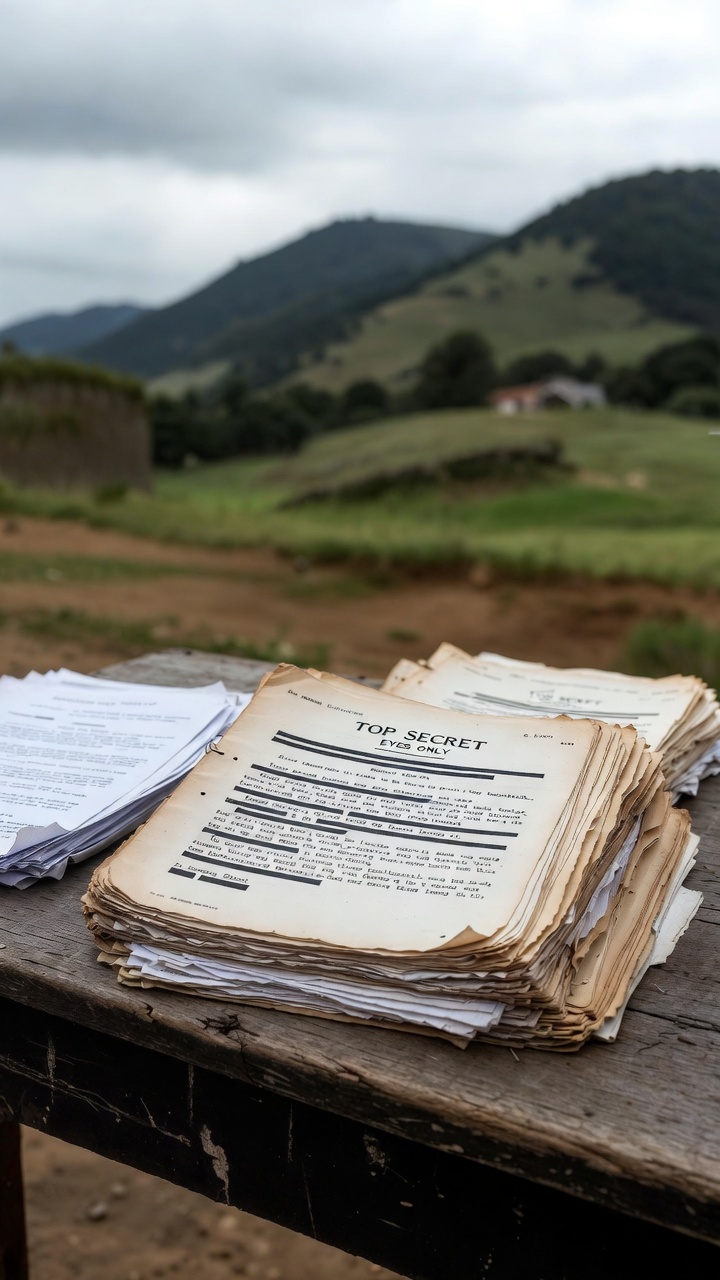
Chile Coup 50th Anniversary Impact: Declassified US Role Full
Fifty years after the night of September 11, 1973, when the Chilean armed forces toppled a democratically elected government, a quiet but powerful wave of documents is reshaping the narrative. The National Security Archive’s Chile Documentation Project, led by Peter Kornbluh, has released hundreds of previously classified cables, memos, and intelligence reports that expose the depth of United States participation. Media outlets across Chile and the United States have mined these files, turning academic footnotes into front‑page stories. The impact is two‑fold: it forces a reassessment of Cold‑War strategy in Latin America, and it fuels a renewed demand for accountability from victims of the Pinochet regime. This article unpacks the most consequential revelations, explains why they matter for today’s foreign‑policy debates, and outlines how the public memory of the coup is being rewritten.
The Historical Context of the 1973 Takeover
Cold War Pressures
The early 1970s were a period of heightened geopolitical tension. The United States, still reeling from the Vietnam quagmire, viewed any left‑leaning government in the Western Hemisphere as a potential Soviet foothold. Chile’s President Salvador Allende, a democratically elected Marxist, embodied that fear. Washington’s policy documents from the era, now declassified, describe the country as a “strategic liability” that could tilt the balance of power in the Pacific.
Chile’s Political Landscape
Allende’s Popular Unity coalition pursued a program of nationalisation, agrarian reform, and expanded social services. While popular among many workers and peasants, his policies also provoked fierce opposition from the Chilean elite, the United States‑based mining sector, and conservative military officers. The internal polarization created an environment where a coup could be framed both as a domestic corrective measure and as a component of a larger anti‑communist campaign.
The National Security Archive’s Chile Documentation Project
Origins & Goals
Founded in 1975 at George Washington University, the National Security Archive (NSA) set out to preserve government records that were being systematically shredded. In 2012, the Chile Documentation Project was launched to centralise all U.S.‑related materials on the 1973 coup. Its explicit goal is to “make the hidden history visible” for scholars, journalists, and citizens.
Key Releases
Since 2018, the project has published more than 1,400 documents, including CIA station reports, State Department cables, and White House memos. Notable releases include:
- “Operation FUBELT” – a covert programme that funded opposition groups and prepared the military for intervention.
- The “Red Book” – a 1972 CIA assessment that labeled Allende’s government as a “potential Soviet proxy”.
- A 1975 Pentagon briefing that openly discussed the “benefits of a stable, anti‑communist Chile”.
These documents have been cited in dozens of news reports, academic articles, and even parliamentary hearings in Chile, illustrating the project’s reach beyond the archives.
U.S. Involvement Revealed Through Declassified Records
CIA Operations & Funding
One of the most striking revelations is the scale of CIA financial support for anti‑Allende groups. Between 1970 and 1973, the agency funneled roughly $7 million (adjusted for inflation) into the “Track II” network, which included right‑wing political parties, trade unions, and media outlets. Internal memos show that CIA officers explicitly discussed “creating conditions for a military coup”.
State Department Communications
State Department cables from the U.S. Embassy in Santiago reveal a pattern of diplomatic pressure on Chilean officials. A July 1972 cable warned that “continued nationalisation could lead to a serious deterioration of U.S.–Chile relations” and hinted at the possibility of “alternative outcomes” if Allende persisted.
Furthermore, a November 1973 memo from the Office of the Secretary of Defense acknowledges that the United States “did not intervene directly in the coup, but provided essential logistical and intelligence support”. The language is deliberately vague, yet the document confirms institutional complicity.
| Year | Document Type | Key Insight | Source |
|---|---|---|---|
| 1970 | CIA Station Report | First mention of “Track II” funding | NSArchive |
| 1972 | State Dept Cable | Diplomatic warning over nationalisation | NSArchive |
| 1973 | Defense Department Memo | Admission of logistical support | NSArchive |
| 1975 | White House Briefing | Strategic assessment of post‑coup Chile | NSArchive |
The Human Rights Aftermath and Legal Reckonings
Truth Commissions
Chile’s own Comisión Nacional sobre Prisión y Tortura (National Commission on Prison and Torture) published a 1991 report that catalogued over 3,000 cases of enforced disappearance and torture. The archive’s declassified files have been cross‑referenced with these local investigations, verifying that many of the victims were targeted because of their perceived affiliation with Allende’s policies.
International Trials
In 2021, a Spanish court opened a civil suit against former Chilean officials, invoking the principle of universal jurisdiction. The case relies heavily on U.S. documents that demonstrate direct knowledge of the coup’s planning. Although the trial is ongoing, it marks a rare instance where foreign archives become a cornerstone of international human‑rights litigation.
Media, Public Memory, and the 50‑Year Reckoning
Documentary Coverage
ChileVision’s “Operación Chile: Top Secret” series, aired in early 2023, incorporated over 200 newly released documents. Interviews with Peter Kornbluh and Chilean historians highlighted how the archives have shifted the public narrative from “foreign meddling” to a more nuanced picture of joint U.S.–Chilean responsibility.
Ongoing Debates
Academic circles remain divided. Some scholars argue that the U.S. role, while significant, was not the decisive factor; internal Chilean dynamics were the primary engine of the coup. Others contend that without American financial and intelligence backing, the military would have lacked the resources to act swiftly. The release of additional documents in 2024—particularly the newly unredacted “Operation FUBELT” strategic plans—has tilted the balance toward the latter view.
INSIGHT: Primary Sources, Government Reports, and Scholarly Analysis
For readers who wish to explore the evidence themselves, the following resources are indispensable:
- National Security Archive – Chile Documentation Project: The central repository of declassified CIA, State Department, and White House files.
- CIA Reading Room – 1973 Chile Files: Officially released agency documents, many of which remain heavily redacted but still provide context.
- U.S. Congressional Record (1974): Debates on foreign policy oversight that reference the Chilean situation.
- Encyclopedia Britannica – Chilean Coup of 1973: A concise overview that cites primary documents.
- Sage Journals – “Cold War Intervention in Latin America” (2021): Scholarly analysis that places the Chilean case within a broader theoretical framework.
These sources illuminate why the newly released archives matter: they provide concrete evidence of policy intent, reveal the mechanisms of covert action, and create a factual foundation for accountability.
FAQ
What new information did the National Security Archive release in 2023?
In 2023 the Archive made public over 200 previously classified documents, including the full text of “Operation FUBELT” strategic plans, CIA station reports that detail financial channels to Chilean opposition groups, and a series of State Department cables that outline diplomatic pressure tactics.
Did the United States directly order the Chilean military to execute the coup?
No single document shows an explicit order. However, the declassified records demonstrate that the CIA provided substantial funding, intelligence, and logistical advice that created a favourable environment for the military to act.
How many Chilean victims are linked to the U.S.-backed operations?
Exact numbers are difficult to pin down, but the Comisión Nacional sobre Prisión y Tortura catalogued roughly 3,200 victims of forced disappearance and torture, many of whom were targeted because of their association with Allende‑aligned organisations that received U.S. covert support.
Are the declassified documents fully unredacted?
Only a fraction are completely unredacted. Most files retain redactions to protect sources and methods, but the substantive content—funding amounts, strategic objectives, and diplomatic communications—remains readable.
Why does the 50‑year anniversary matter for current U.S. foreign policy?
The revelations highlight a historical pattern of covert intervention that informs present‑day debates about transparency, accountability, and the limits of secret diplomacy. Policymakers citing the Chile case often argue for stricter congressional oversight of covert actions.
How can Chilean citizens access these archives?
All documents are publicly available on the National Security Archive website. In addition, Chile’s National Library hosts a digital collection of related local materials, providing a bilingual platform for researchers.
What role did the media play in the coup, according to the documents?
The CIA funded several Chilean newspapers and radio stations that broadcast anti‑Allende propaganda. Internal memos describe these outlets as “key instruments in shaping public opinion” in the months leading up to September 1973.
Conclusion & Key Takeaways
The half‑century after the Chilean coup is not merely a commemorative milestone; it is a moment when hidden archives have finally emerged into the light. The National Security Archive’s diligent work clarifies that the United States, while not the sole architect, played a decisive role in enabling the military overthrow through financial backing, intelligence sharing, and diplomatic pressure. The documents have reshaped academic discourse, fueled legal actions, and forced a public reckoning in Chile and abroad. As more material becomes available, the expectation is that the narrative will continue to evolve—forcing policymakers to confront the long‑term consequences of covert intervention.
What do you think the newly released evidence means for today’s foreign‑policy debates? Share your thoughts in the comments, spread the article on social media, or explore related pieces on U.S. covert actions in Latin America.
You may also like
DOE OICI UAP FOIA: What Energy Intelligence Releases (and Withholds)
CIA Stargate Documents Explained: What’s in the CREST Remote-Viewing Files (and How to Read Them)
Why Is AARO Buying Private Pre-1990 UAP Archives?
What Does Grusch’s UAP NDA Waiver Actually Allow?
NARA UAP Records Collection: What’s in RG 615