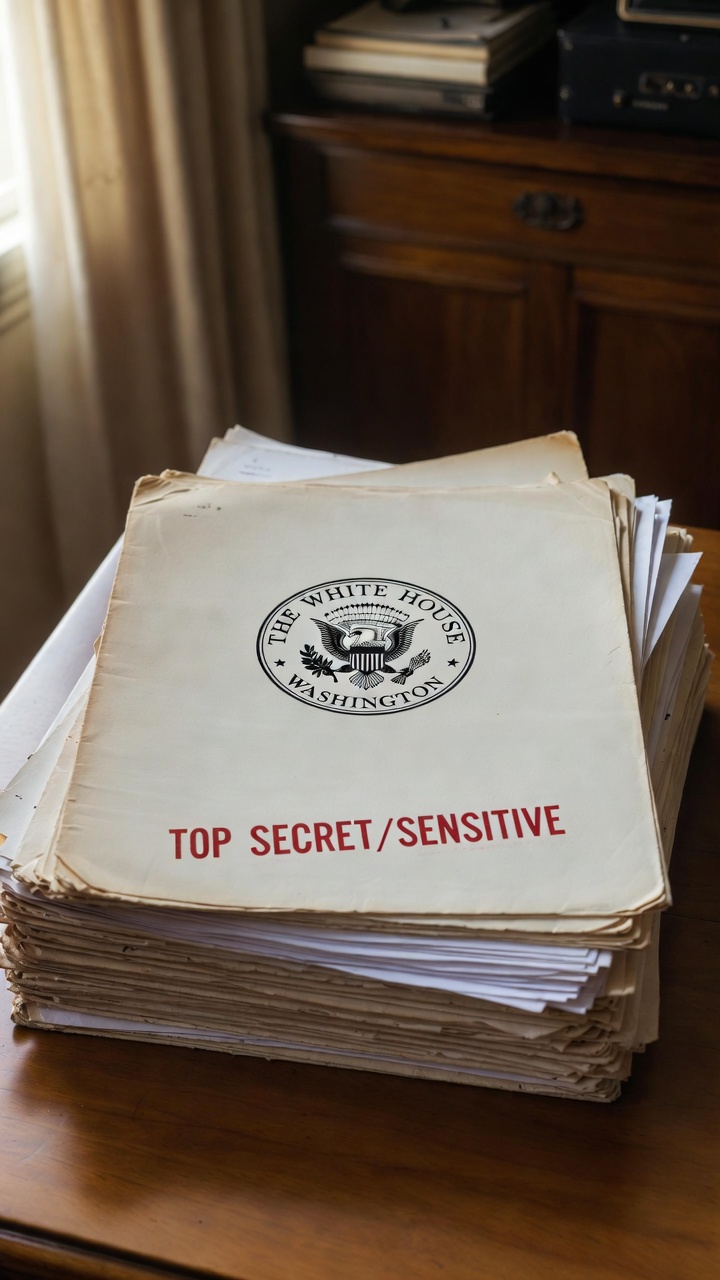
Carter administration national security documents

Carter Administration Security Docs: Declassified Memos Full Collection

Explore the National Security Archive’s new digital collection of 2,557 declassified Carter‑era security memos, revealing top foreign‑policy challenges from 1977‑1981.

Carter Administration Security Docs: Declassified Memos Full Collection


When a government decides to lift the veil on its own past, the resulting paperwork often reads like a time‑machine diary. The National Security Archive, together with ProQuest, has just released a digital trove that covers virtually every high‑level security memo that reached the desk of President Jimmy Carter between 1977 and 1981. The compilation contains 2,557 documents, totalling 8,904 pages, and includes the daily memoranda from the Secretary of State (or acting secretary) together with related inter‑agency communications. For anyone interested in how the United States navigated the final years of the Cold War, the Iran hostage crisis, and the emerging energy challenges of the late 1970s, these files are a rare opportunity to see policy‑making in real time. This article unpacks the collection, highlights the most consequential themes, explains the declassification process, and points out why scholars and analysts should be paying attention now.

Overview of the Collection

Scope and Size

The archive spans the entire Carter presidency, from the inauguration on January 20, 1977, to the final days in January 1981. It comprises 2,557 individual items, amounting to just under 9,000 pages of typed and handwritten material. The documents are digitised at a resolution that preserves marginal notes, signatures, and the occasional coffee‑stain that reminds the reader they are authentic diplomatic artefacts rather than polished PDFs.

Types of Documents

While the headline grabber is the daily Secretary‑of‑State memoranda, the set also contains:

  • Policy drafts circulated among the National Security Council.
  • Briefing memoranda prepared for cabinet meetings.
  • Inter‑agency correspondence concerning nuclear arms control, Middle‑East negotiations, and the emerging energy crisis.
  • Executive summaries of intelligence briefings that informed presidential decisions.

Each file is hyperlinked to its original source in the National Archives, allowing researchers to verify provenance with a single click.

Key Themes in Carter’s National Security

The Iran Hostage Crisis

One of the most persistent threads through the Carter years is the diplomatic scramble that preceded the November 1979 seizure of the U.S. embassy in Tehran. The memoranda reveal a series of missed opportunities, internal disagreements, and the eventual decision to impose sanctions rather than launch a direct rescue operation. A particularly striking document dated March 5, 1979, outlines a contingency plan that was ultimately rejected because of concerns about escalation.

Soviet Relations & Arms Control

The Carter administration is often credited with initiating the Strategic Arms Limitation Talks (SALT II). The released documents include the preliminary negotiation points exchanged between the State Department and the Kremlin, as well as internal assessments of Soviet strategic intentions. A memo from October 1979, for example, shows how senior officials balanced the desire for a comprehensive treaty against the risk of giving the Soviets a strategic advantage in missile technology.

Energy and Economic Pressures

The late 1970s saw soaring oil prices, a severe recession, and growing public anxiety about energy independence. Carter’s security staff treated energy as a national‑security issue, linking it to geopolitical stability in the Middle East and the Soviet Union’s capacity to profit from oil exports. Several memoranda discuss the formation of the Department of Energy in 1977 and its impact on foreign‑policy calculations.

How the Documents Were Declassified

FOIA, Executive Orders, and the 1995 Review

The bulk of the collection emerged from Freedom of Information Act (FOIA) requests filed by the National Security Archive in the early 2000s, coupled with the mandatory review required by Executive Order 12958 (1995) and its 2009 amendment. Those legal mechanisms forced agencies to evaluate each document against the then‑existing classification standards, often resulting in the release of material that had lain dormant for decades.

Role of the National Security Archive

Founded at George Washington University, the Archive has built a reputation for persistent litigation and meticulous archival research. In this case, the organization not only secured the documents but also supplied the necessary context—redactions were explained, and missing pages were flagged for future review. Their partnership with ProQuest allowed the files to be formatted for searchable digital access, a crucial step for making such a massive collection usable.

Research Value and Practical Uses

Academic Scholarship

Historians of the Cold War now have a primary‑source corridor that bypasses the typical reliance on secondary narratives. Graduate theses examining Carter’s diplomatic strategy can cite exact memoranda dates, signatories, and footnotes, thereby strengthening argumentation and reducing speculation.

Policy Analysis

Modern policymakers looking to understand the limits of presidential authority in crisis situations can draw parallels from Carter’s decision‑making chain. The memos illustrate the tension between the National Security Council’s advice and the President’s ultimate prerogative, a dynamic still evident in today’s security apparatus.

Public Engagement

For the broader public, these documents demystify the often‑opaque world of foreign policy. By making the files searchable and freely downloadable, the Archive encourages citizen journalists and watchdog groups to hold current officials accountable for patterns that repeat across administrations.

INSIGHT: Primary Sources and Why They Matter

The following links lead directly to the official repositories and scholarly analyses referenced throughout this article:

These sources are essential because they provide the provenance, authentication, and scholarly framing necessary to move beyond anecdote and into rigorous analysis.

FAQ

What time period does the Carter security memo collection cover?

The collection spans the entire Carter presidency, from 20 January 1977 to 20 January 1981, and includes daily memoranda from the Secretary of State as well as related inter‑agency documents.

How many pages are in the digital archive?

In total, the archive contains 8,904 pages of scanned material, divided into 2,557 individual files.

Are the documents searchable?

Yes. ProQuest’s digital platform provides full‑text OCR, allowing keyword searches across the entire collection.

Can the public download the files for free?

All files are openly accessible through the National Security Archive’s website; no subscription is required.

What are the most significant foreign‑policy issues highlighted?

The memos focus on three major areas: the Iran hostage crisis, Soviet arms‑control negotiations, and the 1970s energy‑economic challenges.

How were the documents declassified?

Through a combination of FOIA requests, executive‑order reviews (EO 12958 and its amendments), and litigation by the National Security Archive.

Why should modern analysts study Carter’s memos?

They reveal decision‑making patterns, inter‑agency dynamics, and the limits of presidential authority that remain relevant to current national‑security challenges.

Conclusion / Key Takeaways

The National Security Archive’s Carter‑era collection is more than a historical curiosity—it is a functional toolbox for anyone trying to decode the mechanics of U.S. foreign policy during a pivotal era. The documents lay bare the administration’s struggle with the Iran hostage crisis, its delicate dance with the Soviet Union, and its attempts to wrestle the energy crisis into a national‑security framework. By making these files searchable and freely available, the Archive empowers scholars, policymakers, and engaged citizens to extract lessons that can inform contemporary debates.

Call to Action

If this deep‑dive sparked curiosity, share the article, leave a comment with your own observations, or dive into the original memos yourself. For further reading, check out our coverage of the “Pentagon Papers” and the “UAP Disclosure Project.”

Disclaimer: This article was created with the partial or full assistance of artificial intelligence. The text and all accompanying images were generated or significantly supported by AI tools.

Leave a Reply

Your email address will not be published. Required fields are marked *