
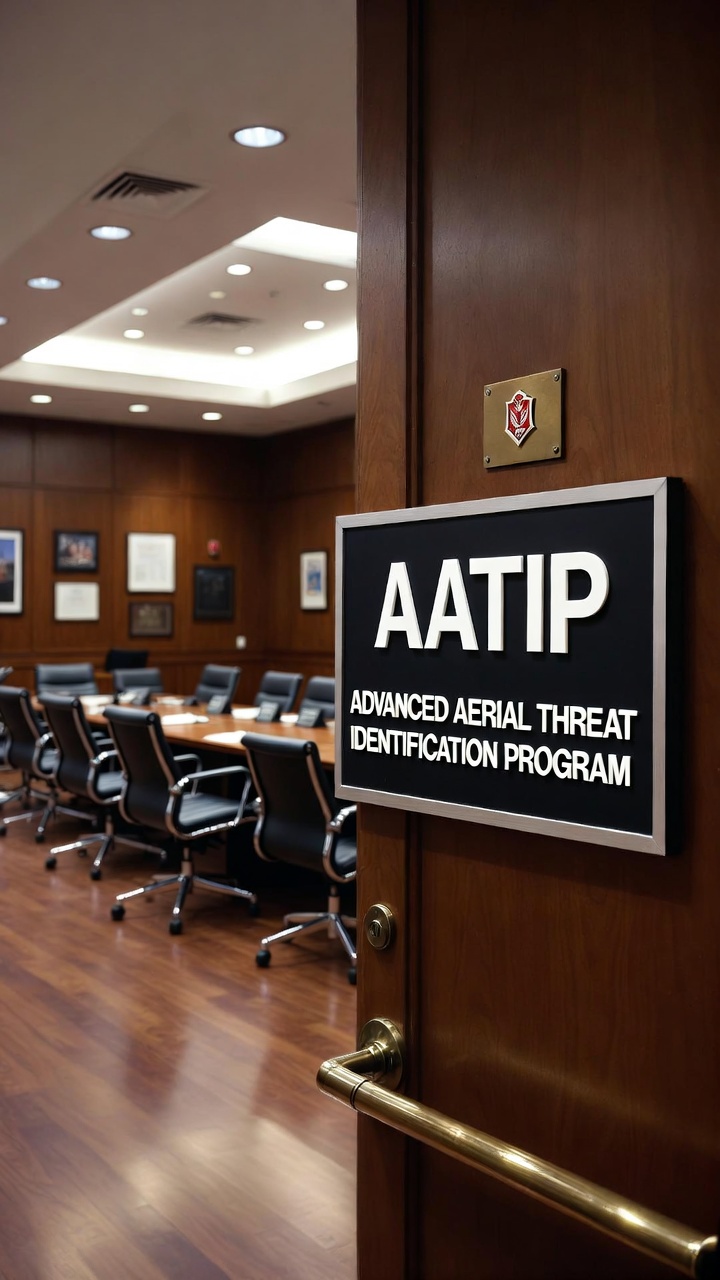
Pentagon emails written in May 2019 document internal discussions about public answers on AATIP and Luis Elizondo’s responsibilities. The Black Vault published its account of this release on 27 April 2026. The correspondence date and public-release date should not be conflated.
Correction, 7 October 2026: This article replaces unsupported quotations and chronology with an identifiable release source. It distinguishes messaging discussions from proof of a programme’s full scope or an individual’s complete employment history.
In this article
Read the email release
The recipient’s release page and reproduced records identify a 7 May 2019 statement by Neill Tipton about Elizondo’s assigned responsibilities during a specific organisational period. Other messages discuss whether that limited answer could represent all of DoD and how to keep responses consistent.
The source compares those messages with September 2017 correspondence concerning a draft AATIP memorandum. It describes request 21-F-0964, its appeal and the remanded case 21-FR-0964. A draft transfer of responsibilities is evidence of a proposal and correspondence; it is not, by itself, proof that every proposed arrangement took effect.
Keep the timelines separate
| Period | Record context |
|---|---|
| September 2017 | Correspondence about a draft memorandum and responsibilities. |
| May 2019 | Internal discussion of answers and their organisational scope. |
| 2021 onward | FOIA request, appeal and subsequent processing described by the recipient. |
| 27 April 2026 | Publication of the recipient’s account of the new emails. |
What the records support
They support examining how officials framed answers and whether their statements covered the same periods, offices and definitions. They do not independently resolve every dispute over AATIP, AAWSAP or Elizondo’s duties. Coordination of public messaging also does not, without additional evidence, prove a particular concealment allegation.
How to compare the versions
- Identify each message by sender, date and subject.
- Keep redacted and less-redacted productions as separate versions.
- Note the request number and release letter for each production.
- Quote only wording visible in the original record, with a page citation.
For another part of the messaging record, see our Christopher Sherwood email guide. Check its separate case numbers rather than treating all Pentagon email releases as one batch.