
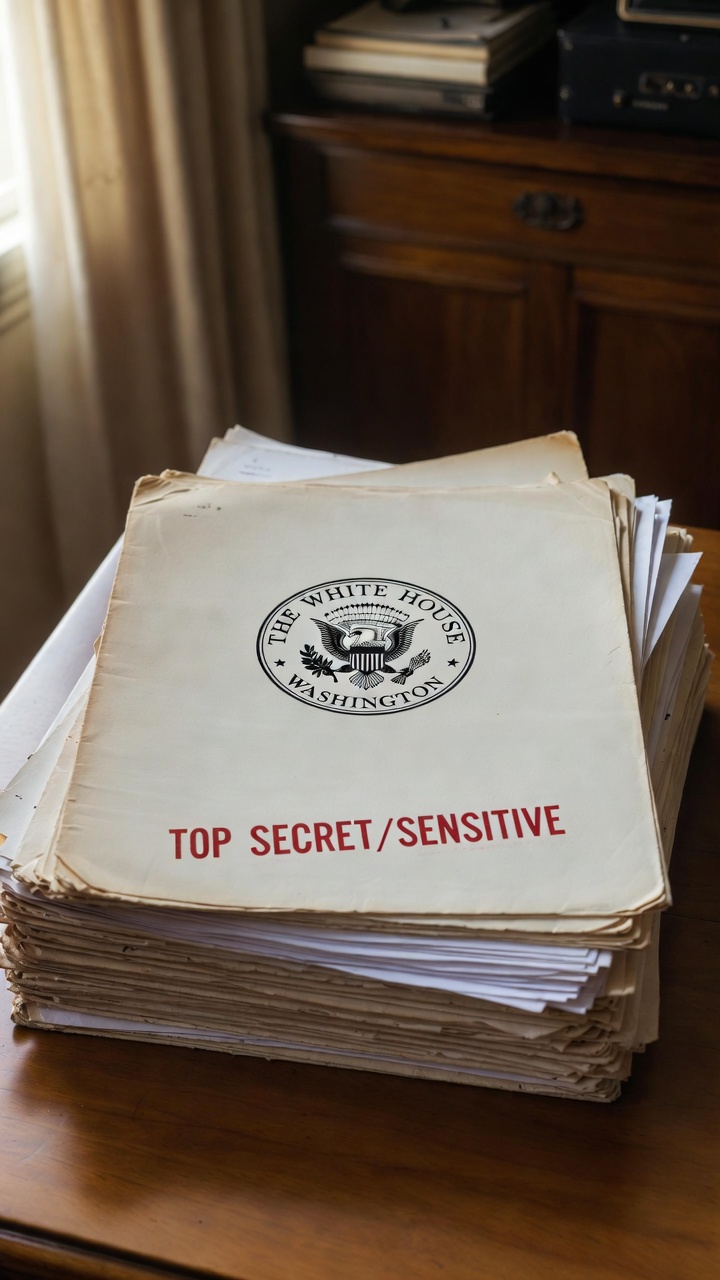
The Carter administration collection is a research edition, not a complete set of every national-security record from the presidency. Its exact title is U.S. Foreign Policy in the Carter Years, 1977–1981: Highest-Level Memos to the President. Start with the specific ProQuest collection guide rather than a publisher homepage.
In this article
What the collection contains
The publisher describes 2,557 documents totaling 8,904 pages. Coverage includes declassified daily memoranda from the secretary of state and national security advisor, NSC and committee meeting records, and weekly staff-activity memoranda. Some documents carry Carter’s annotations. The guide lists material from 1977 through 1981 and is dated December 2024; this is not evidence of a new 2026 release.
Its scope is the published selection of available records. Missing documents, still-classified holdings and material in other archival series should not be treated as absent from government files simply because they are outside this collection.
Access: library database versus free documents
The National Security Archive’s researcher guide describes DNSA access through university and research libraries and recommends consulting a librarian. The public collection description is freely readable; it does not establish that every document can be downloaded without institutional access.
Check your library’s catalog for the Digital National Security Archive, then confirm whether its holdings include this particular set. Follow the library’s own sign-in instructions. Public briefing books and the Archive’s virtual reading room provide additional discovery routes, but their coverage is not necessarily identical to the DNSA edition.
A practical research workflow
- Define a topic and date range before searching: for example, a specific diplomatic negotiation rather than the whole Cold War.
- Limit the database search to the Carter collection where that option is available.
- Record the document identifier, date, sender, recipient, subject and relevant page.
- Read the full memo, attachments and annotations before extracting a sentence.
- Compare advice, a recorded decision and subsequent implementation; a proposal is not proof that an operation happened.
- Save a citation and access date alongside your notes, and mark any gaps or unreadable scans.
Topics and interpretation
The collection guide identifies subjects including the Iran crisis, relations with the Soviet Union, China, the Middle East, human rights and arms control. Search these as starting points; this guide does not claim that a specific unlinked memo proves a particular policy outcome.
A sound analysis should identify which official wrote a recommendation, whether the president responded, and what further records support an inference. Distinguish contemporary views from later historical interpretation.
FAQs
Is this every Carter national-security document?
No. It is a defined documentary collection with stated coverage and availability limits.
Can everyone download the full set for free?
Do not assume that. Check institutional access; the public description and free Archive postings are different resources.
Are the quoted document and page counts verified?
They match the publisher’s collection description checked on 7 October 2026. They describe this edition, not every Carter-era holding.
Correction and source check
Updated, 7 October 2026: The earlier article incorrectly promised unrestricted free access to every file and presented unlinked memo examples and declassification history as established facts. This version links the named collection, states its access limits and removes those unsupported examples.